Empyrean Bio Labs

Empyrean Bio Labs

Shop

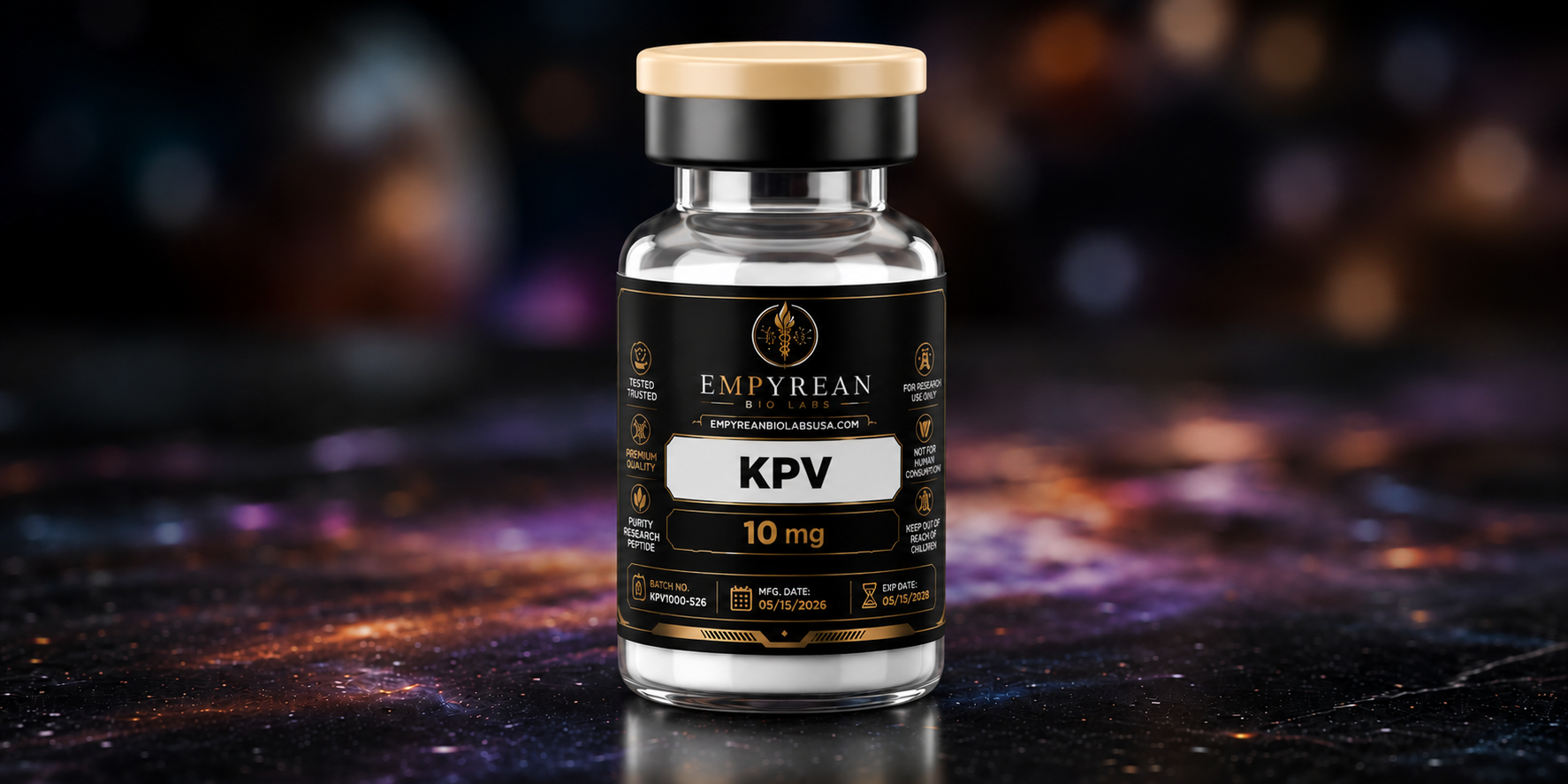
KPV

$60.00

KPV
A compact but powerful anti-inflammatory tripeptide derived from alpha-MSH. KPV is studied for intestinal-barrier integrity, gastrointestinal comfort, colonic inflammation, skin irritation, wound recovery, and balanced immune signaling. Research models have demonstrated reduced inflammatory activity and improved colitis-related outcomes.

Research Details

KPV Scientific Research Overview KPV is a three-amino-acid peptide composed of lysine, proline, and valine. It corresponds to the terminal sequence of alpha-melanocyte-stimulating hormone but does not retain the full parent peptide’s sequence. Research has focused primarily on inflammatory signaling, intestinal peptide transport, epithelial-barrier function, wound-related pathways, and experimental gastrointestinal inflammation. Published Research Findings In mouse models of chemically induced colitis, KPV was transported through PepT1 and reduced the severity of both DSS- and TNBS-induced intestinal inflammation. Reported findings included reductions in inflammatory signaling and improvements in experimental disease measurements. Additional mouse research found that KPV administration reduced the development of colitis-associated cancer under the study conditions. The investigators linked the effect to PepT1-mediated uptake and reduced inflammatory activity. Targeted nanoparticle systems incorporating KPV have also been investigated to improve intestinal delivery. Preclinical studies reported reductions in inflammatory cytokines and improvements in intestinal-barrier proteins and disease-activity measurements in mouse colitis models. These delivery-system findings do not establish equivalent behavior for unformulated KPV. Evidence and Regulatory Context KPV remains preclinical. FDA reported that it had not identified human exposure data involving KPV drug products administered by any route and lacked sufficient information to determine whether KPV could cause harm in humans. In July 2026, FDA presented KPV-related substances to its Pharmacy Compounding Advisory Committee and proposed that they not be included on the Section 503A Bulks List. Research Links KPV Uptake Through PepT1 and Experimental Colitis KPV and Colitis-Associated Cancer in Mice KPV-Based Targeted Nanomedicine for Colitis 2024 KPV Nanoparticle Research in Acute and Chronic Colitis FDA 2026 KPV Briefing Document Research Context: Published findings summarized on this page involve cellular experiments, specialized delivery systems, and animal models. FDA has not identified human exposure data for KPV drug products, and the preclinical findings do not establish human safety or effectiveness. These studies do not establish the identity, purity, sterility, safety, effectiveness, or regulatory status of the research material offered on this page. This product is sold strictly for lawful laboratory research and is not intended for human or veterinary use.

Vial10 mg
StorageStore the unopened lyophilized material in a tightly sealed container in a cool, dry, dark environment, protected from moisture, direct light, and temperature fluctuations. After reconstitution, keep refrigerated at 36–46°F, protect from light, and minimize unnecessary handling and temperature changes.
Compliance Notice: For research use only. Not for human consumption. Not intended to diagnose, treat, cure, or prevent any disease. Products and information are intended for qualified adult researchers only.

Description

KPV

KPV is a compact three-amino-acid peptide derived from the anti-inflammatory region of alpha-melanocyte-stimulating hormone. Despite its remarkably small structure, KPV has generated significant research interest for its effects on immune signaling, inflammatory pathways, epithelial tissues, intestinal integrity, skin irritation, and wound recovery. Its biology allows researchers to explore the anti-inflammatory characteristics of alpha-MSH without requiring the complete parent hormone.

Research models involving colitis have reported reduced inflammatory changes, recovery of body weight, and improved tissue appearance following KPV treatment. Additional work has explored its effects on immune-cell activation, cytokine signaling, antimicrobial defense, and epithelial protection. These pathways make KPV particularly compelling for research involving the intestinal barrier, gastrointestinal comfort, colonic health, inflammatory skin conditions, wound healing, and balanced immune responses. Its focused anti-inflammatory profile also makes it an ideal complement to regenerative peptides such as BPC-157, TB-500, and GHK-Cu.
Reviews

There are no reviews yet.

Be the first to review “KPV”

Your email address will not be published. Required fields are marked *